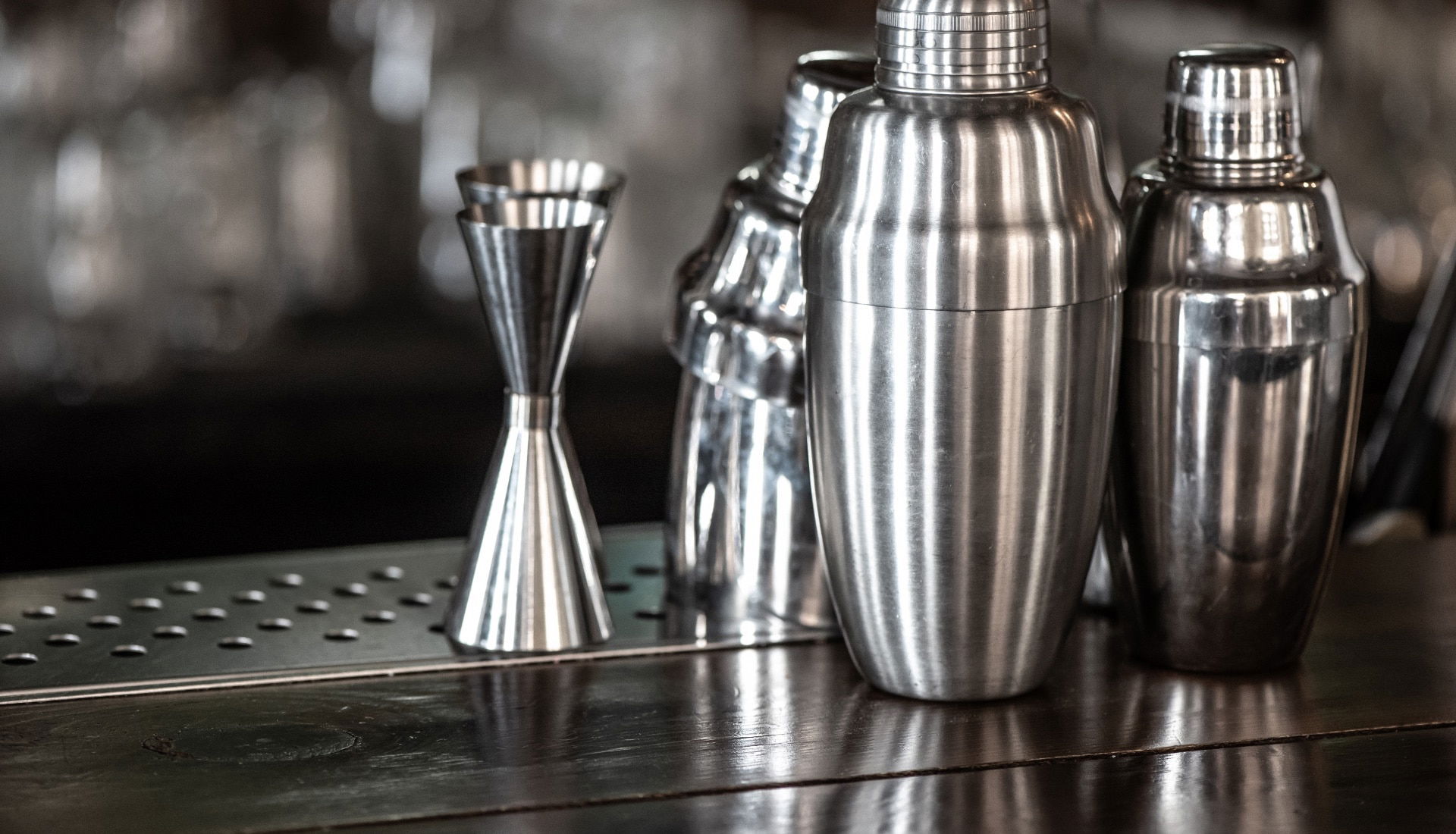
It’s not a piece of equipment that makes many appearances behind the commercial bar but the Cobbler shaker is a favourite of many home bar enthusiasts. The Cobbler shaker, actually began life as a shaker by a different name, combines the functions of a shaker and a strainer in one handy device. To learn more about the cobbler shaker, read onward!
History
The Cobbler shaker began life as a French or Parisian shaker. The origins of this name is not known, but it is assumed that because this shaker was brought to the United States from Europe that it was its heritage which gave it that name.
As with our other style of shaker, the Boston shaker, the concept of a vessel being used to mix drinks through the motion of shaking is nothing new; we have evidence of such tools existing 9000 years ago! In 1520 Hernando Cortez reported back to the Spanish crown that the indigenous peoples of the New World, South America, were mixing cacao drinks with a vessel designated specifically to the mixing. The two part style shaker that we currently use was an idea conjured up in the USA in the middle of the Nineteenth Century. Before this, drinks were rolled between two glasses to mix them. This new method of putting the glasses together and shaking the contents travelled quickly, it also travelled across the ocean to Europe. Where somewhere along the way the shaker tin gained a custom built, tight fitting lid rather than just being slotted over a glass. This resulted in a shaker that now bears the name French shaker or Parisian shaker. This shaker, however still had one transformation left to come.
Many patents were filled promising to improve the standard two-part cocktail shaker – which we now know as the Boston shaker- and the French shaker but only one of those stuck. In 1884 Edward Hauck invented the Cobbler shaker by adding a strainer to the cap of the French shaker. It is said that it was named the Cobbler shaker because that was the most popular cocktail at the time so it is the cocktail that it was being used for the most.
Appearance and Variations

The Cobbler Shaker looks like a normal shaking tin with a nippled cap that fits snuggly into the mouth of the shaking tin. The nipple on the cap is removable and hidden beneath is the strainer through which you can strain a shaken cocktail. Besides its size the cobbler shaker varies very little in regards to variations that affect its cocktailing abilities. Where it does vary is in its aesthetic qualities. A variety of colours, designs and finishes help to make this the home bar enthusiasts personalise-able shaker of choice.
It is wise to note that when purchasing a Cobbler shaker buying cheap can often be a fatal error. Cheaper versions of this style of shaker show manufacturing flaws easily and one of the main, and killer, flaws for the Cobbler shaker is the lack of a tight seal. If the lid doesn’t seal properly your carefully measured out ingredients will spray out of the side of your shaker whilst you shake; ruining your cocktail, your shirt and your guests experience. Not what you want happening!
Using the Cobbler Shaker

Using the Cobbler shaker is much simpler than using a Boston shaker. With the latter, one must learn the technique of opening the air tight seal created by the two parts. The Cobbler shaker eliminates the need for this struggle with it’s built in strainer. Simply fill with ice, add your ingredients, put on the cap (ensuring the strainer cap is also on) and SHAKE! Afterward just slip off the strainer cap and pour your cocktail into your serving glass. Voilà!
The reason that the Cobbler shaker, despite its convenience, doesn’t have much favour with bartenders is it’s lack of ability to double strain; as one does with a Hawthorne Strainer. The single strainer found in the top of the Cobbler shaker allows small shards of ice to slip through and sit atop the cocktail. This can be avoided by using a fine mesh strainer to filter out these particles; but some would argue that the whole point of the Cobbler shaker is that you don’t need to use another tool. Each to their own.
Common Cocktails Calling for a Shaker

There is a saying that says “shake it to wake it” and this means that those citrus heavy drinks or those containing egg whites, need shaking to really amalgamate and bring out their flavours. It stands to reason then that those drinks that contain these ingredients are those that call for shaking. This isn’t a hard and fast rule, as you’ll see from the list below; but it is a good rule of thumb.
- Martini
- Margarita
- Aviation
- Cosmopolitan
- Daiquiri
- Gimlet
- Sours
- Sidecar