+44 330 818 7066
  • Student account
  • English
    • English
    • English
    • English
    • English
    • English
    • English (UK)
    • German
    • Italian
    • French
    • Spanish
    • Dutch
    • Norwegian
    • Portuguese
    • Danish
    • Swedish
    • Thai
    • Finnish
    • Latam
    • Mexican
Hit enter to search or ESC to close
Close Search
European bartender school logo redEuropean bartender school logo white
  • Promo
Menu
  • Bartender courses
  • Destinations
  • About EBS
  • FAQ
  • Contact
  • Promo
  • Book now
    99 cobbler shaker bar tools
    Bartender Techniques

    The Cobbler Shaker: Bar Tools

    May 17, 2019May 26th, 2025

    The Cobbler Shaker may not be as popular with bartenders as its shaker-cousin, the Boston Shaker, but with home bar enthusiasts, it certainly is!

    The Cobbler Shaker is a ‘Jack-of-all-trades’ kind of cocktail shaker, combining multiple functions in one device. And even if it’s not the most used shaker, all bartenders should master this bar tool.

    Learn more about the Cobbler Shaker below, including history, use and appearance…

    The history

    Bartender pouring with the Cobbler Shaker

    The Cobbler Shaker has had a long, long existence, travelling through different ages and cultures. It’s a cocktail shaker that’s been heavily influenced by other similar tools and styles popular at the time.

    Just like with the Boston Shaker, the concept of shaking a drink in two vessels has evidence dating back 9000 years ago. However, for the Cobbler Shaker, we can skip over a few thousand of those years. As a bar tool, its origin comes from the Boston Shaker, created in the nineteenth century. This method of using two glasses together to mix drinks became very popular in cocktail culture at the time. Once this travelled to Europe, a custom-built shaker tin with a tight-fitting lid was created. This was the French Shaker.

    The Cobbler Shaker was influenced by the design of this cocktail shaker. Edward Hauck, in 1884, officially invented the Cobbler Shaker we know today by adding a built-in strainer to the design, making a three-piece shaker. Its name is said to derive from a popular cocktail of the time (the Cobbler) which was primarily made by being shaken in these cocktail shakers.


    Cobbler Shaker appearance

    cobbler shaker and cocktail on bar

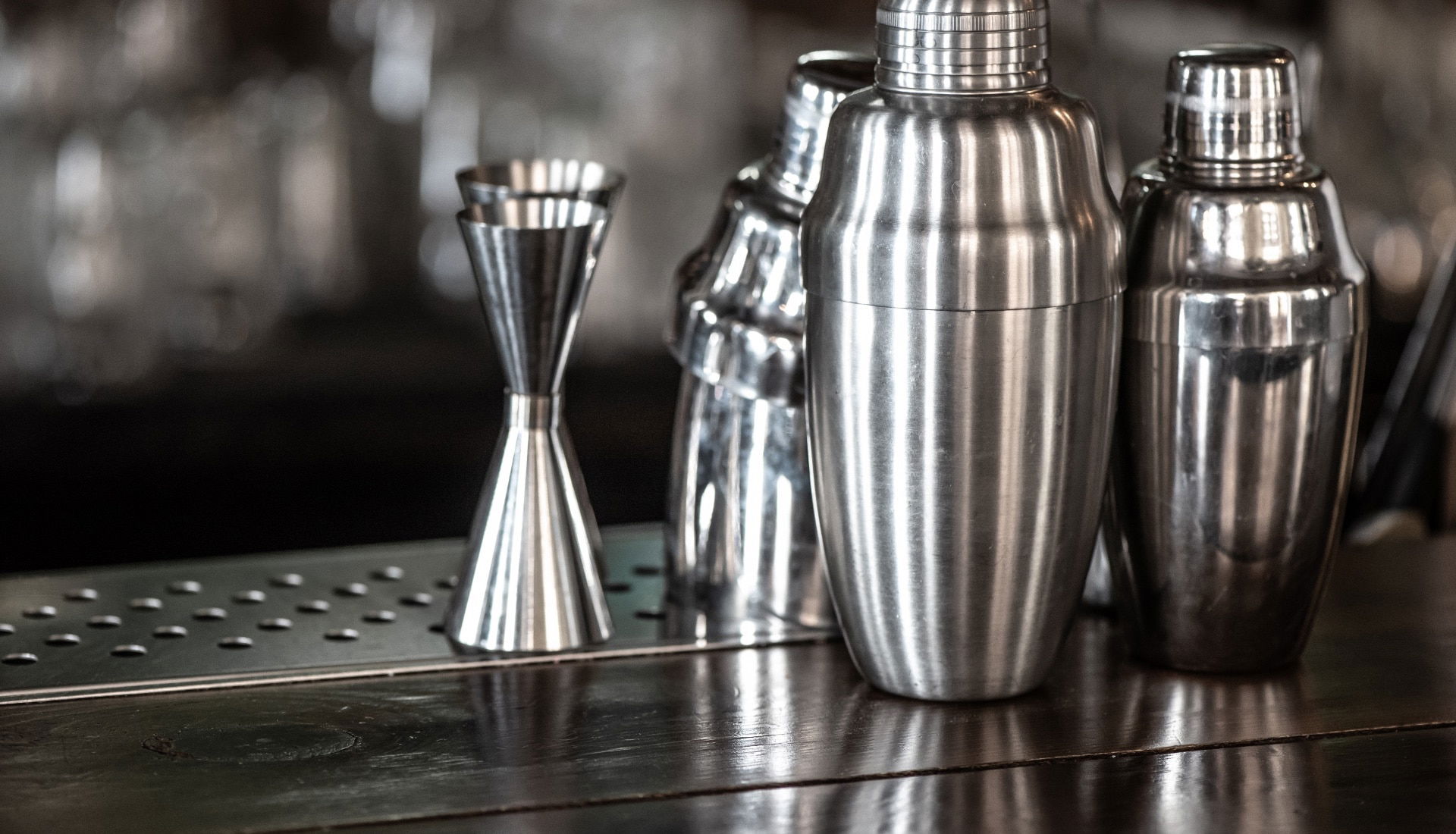
    The Cobbler Shaker is a very simple design. It’s a three-piece cocktail shaker, made of a shaking tin, integrated strainer and cap. Every part is removable, so once a cocktail has been well shaken, the lid can be taken off to strain it.

    Cobbler Shakers rarely see any variations in functionality and size from one another. Any variation is simply aesthetic. Cobblers can come in a variety of different colours, designs and finishes, great for Cobbler-enthusiasts looking for a personal touch.

    However, note that buying cheap Cobbler Shakers can be a big mistake. Cheaper versions of the cocktail shaker show manufacturing flaws, mainly being the tight seal. If the seal isn’t tight enough, the delicately measured ingredients of a complex cocktail will spray out of the side and possibly over awaiting guests, not ideal. Remember to buy quality when considering a Cobbler Shaker.


    How to use a Cobbler Shaker

    bartender using cobbler shaker

    Cobbler Shakers are much easier to use compared to Boston Shakers. The trick with a Boston Shaker is to master the technique of opening the air-tight seal to strain the cocktail. The Cobbler Shaker eliminates this issue by having its own integrated strainer by simply removing the cap. To make this simple cocktail shaker even simpler, we’ve given you a very easy four step guide to using the Cobbler…

    1. Fill the shaker tin with the cocktail ingredients and ice.

    2. Fix the strainer and cap onto the shaker tin.

    3. Ensuring everything is fixed on well, shake the shaker.

    4. Finally, remove the cap and pour out the ingredients into a serving glass. Voilà!

    Despite its convenience, the Cobbler Shaker lacks the ability to double strain. This is why bartenders prefer to use a Boston Shaker, as a Hawthorne Strainer can be easily attached to provide this valuable service. As the Cobbler can only single strain, a Fine Strainer is often needed to complete the straining, to ensure no particles have fallen through to ruin the drink’s aesthetic. Using a Fine Strainer with the Cobbler Shaker adds a little more time when making cocktails, which is why bartenders prefer the Boston Shaker.


    Cobbler Shaker vs Boston Shaker

    bartender holding shaker

    Whilst they’re both cocktail shakers and iconic bartender basics, the Cobbler and Boston Shaker offer slightly different applications. Cobbler Shakers come as a ‘three-piece cocktail shaker’, with the shaker tin, strainer and lid. The Boston Shaker, however, is a two-piece, made of just two stainless steel tins.

    There’s no significant benefit of one over another. Bartenders prefer to use the Boston Shaker as it’s a much lighter cocktail shaker and has the potential to be double strained quickly. However, this is all personal preference.

    Cocktails that use a Cobbler Shaker

    cocktail margarita con due lime

    There are cocktails out there that need a little bit of a heavy hand to get their true potential out. Bartenders must ‘shake it to wake it’ with these ones. Cocktails with citrus and egg whites, in particular, need to be ‘woken up’. This isn’t a strict rule, but it’s a good rule of thumb. Below, are some cocktails which enjoy a good shaking.

    • Martini – different types of Martini may use a stirring method, however.
    • Margarita
    • Aviation
    • Cosmopolitan
    • Gimlet
    • Whiskey Sour

    Feel inspired to bartend? Learn more about our EBS Bartender Course.

    Subscribe to the EBS newsletter

    Get the latest bartending news, tips, exclusive invites. Subscribe now!

    "*" indicates required fields

    This field is for validation purposes and should be left unchanged.
    • Previous PostBartending books for beginners: Top 9

    • Next PostBartender Tips In The UK

    Related Posts

    How to tamp Espresso like a pro Bartender Techniques How to tamp Espresso like a pro

    How to tamp Espresso like a pro

    February 9, 2026
    Shaking vs stirring Bartender Techniques Shaking vs stirring a cocktail: which technique should you use?

    Shaking vs stirring a cocktail: which technique should you use?

    January 22, 2026
    Bartender Skills That Will Make Your Resume Shine1 Bartender Techniques 7 bartender skills that will make your resume shine

    7 bartender skills that will make your resume shine

    September 10, 2025
    European bartender school small logo white

    The world’s largest bartender school

    • European Bartender School
    • Bartender Courses
    • Destinations
    • Life as a Bartender
    • Work as a Bartender
    • Blog
    • Recipes
    • Bartending Jobs
    • Partnerships
    • Careers
    • About EBS
    • FAQ
    • Contact
    • Book a course
    • European Barista School
    • EBS Stay
    Open Instagram profile page
    Open Facebook profile page
    Open Youtube channel page
    Open TikTok profile page
    Open Linkedin profile page
    Open Pinterest profile page
    • Site terms
    • Privacy Policy
    • Booking Terms
    • Comment moderation
    • Change country

    European Bartender School International Limited, Sovereign Place, 117 Main Street, Gibraltar, GX11 1AA

    Close Menu
    • Home
    • Bartender Courses
      • N1 Bartender Course in the World
      • International Bartender Course
      • Popular courses
      • Online Bartending Courses
      • Barista Course
      • Basic Bartender Course
      • Advanced bartender courses
      • Advanced Bartending Course
      • Flair Bartending Course
      • Instructor Academy
      • Specialised bartender courses
      • Mixology Course
      • Working Flair Course
      • All courses
    • Destinations
      • London
      • Phuket
      • Sydney
      • Cape Town
      • Kos
      • Barcelona
      • Amsterdam
      • Berlin
      • Copenhagen
      • Madrid
      • Mallorca
      • Milan
      • Paris
      • Vienna
      • See all destinations
    • About EBS
    • FAQ
    • Contact
    • Blog
    • Student account
    • English
      • English
      • English
      • English
      • English
      • English
      • English (UK)
      • German
      • Italian
      • French
      • Spanish
      • Dutch
      • Norwegian
      • Portuguese
      • Danish
      • Swedish
      • Thai
      • Finnish
      • Latam
      • Mexican
    • Student account
    • English
      • English
      • English
      • English
      • English
      • English
      • English (UK)
      • German
      • Italian
      • French
      • Spanish
      • Dutch
      • Norwegian
      • Portuguese
      • Danish
      • Swedish
      • Thai
      • Finnish
      • Latam
      • Mexican

    Book an EBS Course

    Request more info

    +44 330 818 7066

    Monday to Friday, 10:00 to 19:00

    Get the Course Guide

    Fill in the form below to get the full course guide. Everything you need to know, in one place.

    "*" indicates required fields

    This field is hidden when viewing the form
    Consent*

    Request more info 

    "*" indicates required fields

    This field is for validation purposes and should be left unchanged.
    This field is hidden when viewing the form
    How would you like us to contact you?
    Consent*

    Request more info

    "*" indicates required fields

    This field is for validation purposes and should be left unchanged.
    This field is hidden when viewing the form
    How would you like us to contact you?
    Consent*

    European Bartender School Phuket students instructors

    Get your course guide

    Get access to the International Bartender Course guide with all the information about the course, schools, program and much more.

    Get the Course Guide

    Request more information

    Forward any specific query you have to our EBS care team. We will be happy to answer any of your questions!

    Request more information

    Get your Course Guide

    Fill in the form below to get the full course guide. Everything you need to know, in one place.

    "*" indicates required fields

    This field is hidden when viewing the form
    Consent*